
Garage Door Repair: Repair or Replace? How Princess Anne Homeowners Decide
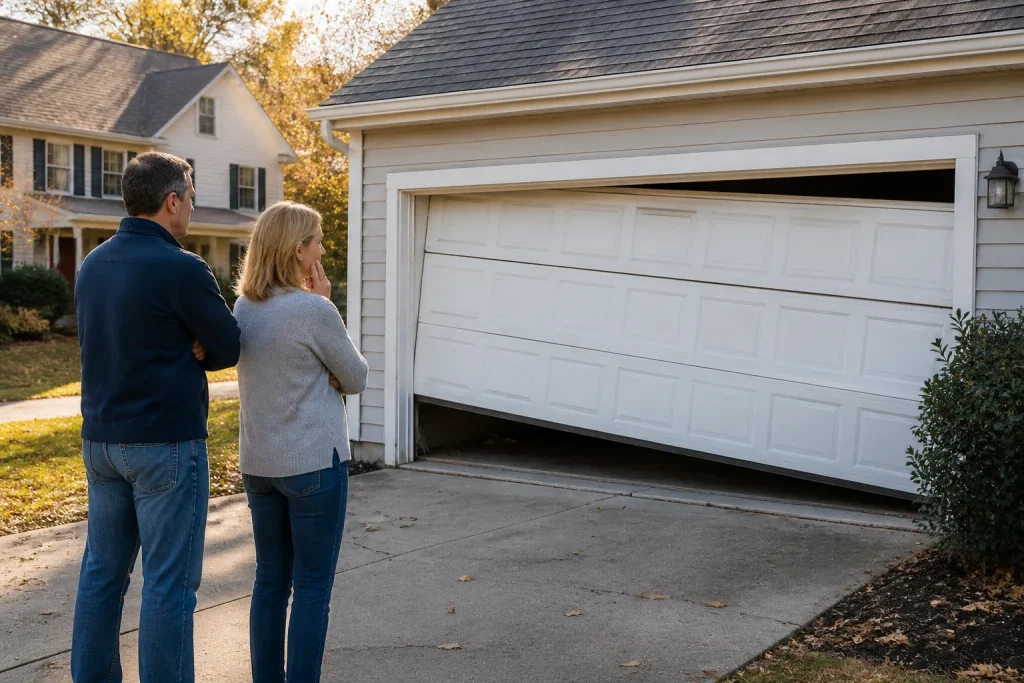
Here’s the mistake we see most often: a homeowner decides whether to repair or replace based on the door’s age alone. It doesn’t work that way. A ten-year-old door with one broken spring almost always makes sense to repair. A seven-year-old door with a cracked panel, worn rollers, and an opener that’s clearly struggling is usually cheaper to replace. The question isn’t how old the door is. It’s whether the failure is isolated or systemic, and once you know which one you’re dealing with, the decision gets a lot simpler.
What’s the difference between an isolated failure and a systemic one?
An isolated failure is one thing going wrong on an otherwise healthy door. A single spring snaps on a door where everything else is sound. That’s a repair, full stop. A systemic failure is when the door is telling you several things at once: the panels are showing wear, the rollers are flat-spotted, the hinges are loose, and the opener is laboring to lift a door it used to handle easily. Repairs on a door like that start stacking up, and each one buys you less time than the last.
The most reliable signal is timing. If a single component fails on a door that’s been quiet for years, that’s bad luck. If you’re calling for service several times in a season or two, on different parts of the same door, that’s a pattern. The door isn’t wearing out piece by piece. The whole assembly is reaching the end of its service life, and patching individual parts is throwing money at a door that’s already decided its future.
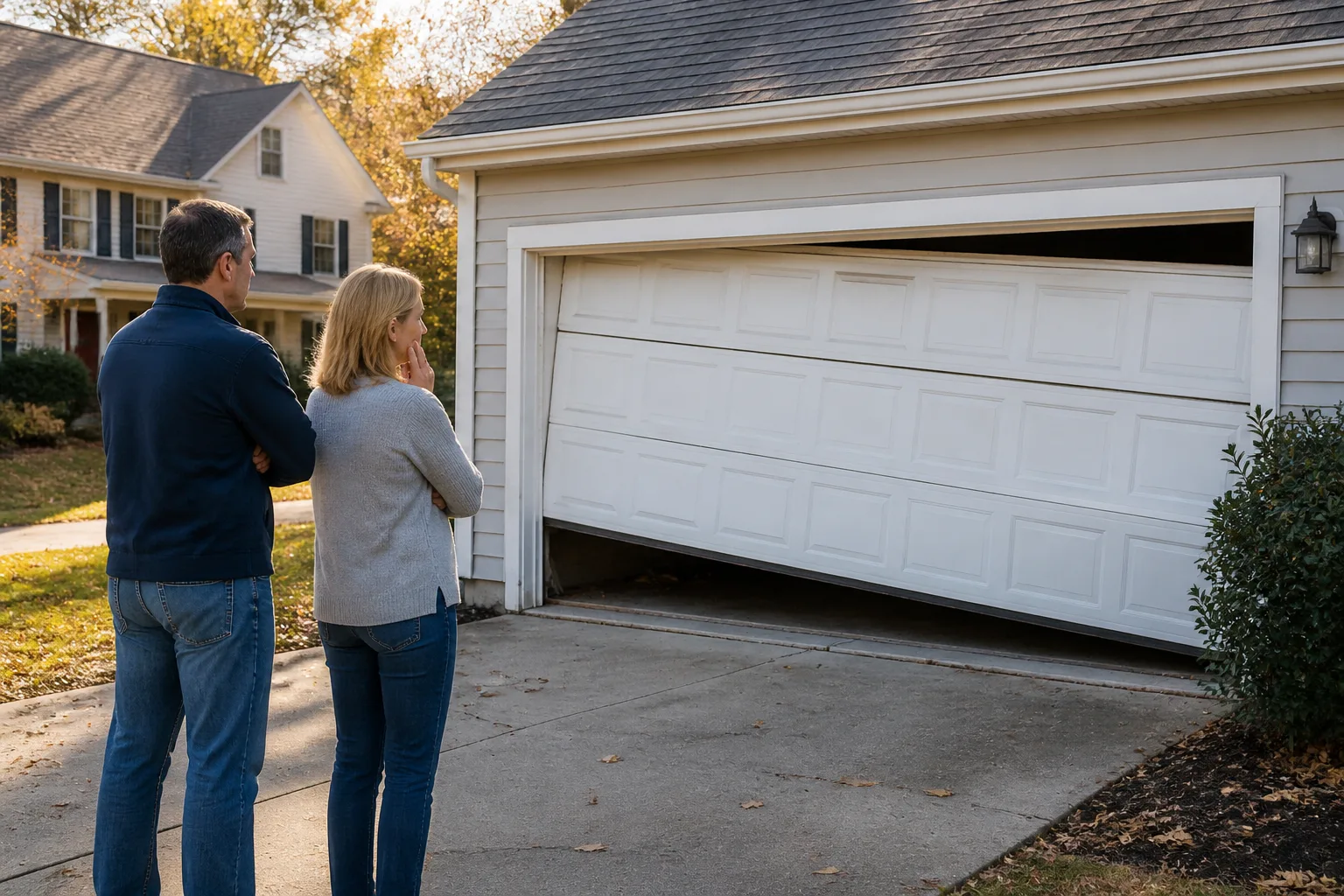
Panel condition matters here more than most homeowners expect. A single dented or scratched panel is cosmetic. A panel with a crack running through it, or a section that’s separated at the seam, is structural: it changes how the door distributes weight, how the tracks take the load, and how safely the opener can lift it. A structurally compromised door isn’t a repair decision anymore. It’s a replacement decision, and the honest thing is to say so.
The three-failure rule: when multiple problems on a younger door signal wear
We use a simple framework with Princess Anne homeowners, and it holds up across every brand we work on. If a door under fifteen years old shows two or more simultaneous component failures, treat it as a systemic problem rather than bad luck. Two failures in the same service call means the door is aging as a unit. Three means it’s time for a serious conversation about replacement.
The failure clusters tend to look the same regardless of brand:
- Spring and opener together. A worn spring forces the opener to overwork, and overworked openers fail early. Replacing the spring without addressing the opener just moves the next failure forward a few months.
- Rollers, hinges, and tracks. When these wear together, the door’s alignment drifts, and every lift strains the opener and the springs. These parts rarely fail one at a time on a door that’s structurally sound.
- Panel damage plus hardware wear. Cracks or separated seams combined with worn rollers or loose hinges mean the door’s load path has changed. This is the cluster that most often flips a repair into a replacement.
- Opener strain on a door with visible balance issues. A door that won’t stay halfway up on its own is out of balance. Pair that with an opener that’s struggling, and you’re looking at two failing systems feeding each other.
One failure on a door under fifteen years old: repair. Two or more, on different components, without an obvious single cause: replacement math starts to win. That’s the framework, and it doesn’t depend on the brand on the door.
How much does repeat repair cost versus replacing the door?
This is the calculation most homeowners never actually run, and it’s easy since you only need two numbers: what you’ve already spent on repairs, and what you expect to spend over the next ten years if you keep repairing. Do it in a spreadsheet or on the back of an envelope, because the comparison is usually stark once it’s written down.
A realistic comparison for a Princess Anne door that’s showing systemic wear:
| Path | Typical cost pattern | What you get |
|---|---|---|
| Keep repairing a declining door | Spring repair, then opener repair, then rollers or a panel, spread across a few years | Every repair buys shorter intervals until the door still fails |
| Replace the door now | One installation cost, then routine maintenance only | A door that lifts cleanly for the next decade or more |
Run the repair column out ten years. If the sum of expected repairs gets anywhere near the cost of replacement, the decision is made for you. A door that needs work every year isn’t saving you money, it’s costing you money in installments.
The other cost to factor in is the one nobody budgets for: the morning the door won’t open. If the door is the main way in and out of the house and it fails, your whole day shifts. A door on its last leg doesn’t fail conveniently. When you weigh that against a replacement cost spread over the years you’ll use the door, the math usually favors replacement sooner than most homeowners expect. For the full picture on replacing, see our garage door installation page.
Which door material holds up best in Princess Anne’s humidity?
Princess Anne sits in a humid, subtropical coastal climate, and that matters for material choice. Steel holds up best overall when the finish is intact and the internal frame is sound. It’s the most common door type in the area for that reason. Wood composite doors can perform well but need more attention here: they’re more prone to swelling and finish breakdown in sustained humidity, so they lose ground over ten years unless they’re maintained carefully. Fiberglass resists moisture well and won’t rust, but the surface finish can chalk and age in strong sun, and older fiberglass panels have less resilience to impact damage.
What all three have in common is that moisture does its damage where you can’t see it. A steel door that’s dented at the bottom edge is where rust starts. A wood composite door with a failed seal at the bottom rail is where swelling starts. A fiberglass door with chalking on the south-facing side is where finish failure starts. In this climate, regular inspection of the lower panels, bottom seal, and threshold is the single highest-value habit for extending life. If you’re noticing rust, swelling, or finish breakdown on a door, that’s a signal to get it looked at before the damage crosses into the structural territory we covered earlier.
Does replacing the door mean replacing the opener too?
Not always, but it depends on the opener and the door. The honest rule: if the existing opener is a current-generation unit with adequate lifting capacity for the new door, it can often carry over. If it’s a legacy analog system, or a smart-home-integrated Genie, Chamberlain, or LiftMaster opener that’s aged out, it needs to be replaced with the door.
The factors that decide it:
- Lift capacity. The new door’s weight and balance must be within the opener’s rated range. Most residential openers have enough headroom, but not all doors are the same weight.
- Drive type. Belt and screw drives tend to carry over better than older chain systems that have already worn.
- Safety features. Current openers have reversal and entrapment protection that older units may lack. Those aren’t optional features.
- Smart-home integration. If the home is set up with connected controls, a legacy opener needs replacement anyway to work with the car or app.
Replacing the door and keeping the opener is the cheaper path when it’s viable. Replacing both together is often the better path when the opener is already at the end of its life and the door is going to stress it. Either way, the decision should be made after a technician actually checks the opener’s condition and the new door weight, not before. Our garage door opener repair page goes deeper on this trade-off.
When to call a pro
Two parts of this decision are genuinely dangerous to handle alone. Garage door springs are under extreme tension and can cause serious injury if they’re released or mishandled. Electrical work and any opener rewiring carries its own risk. Don’t touch either. If your door is out of balance, if the spring is broken, or if the opener is making a noise it hasn’t made before, that’s a call, not a DIY project.
We work on Genie, Clopay, Amarr, and Wayne Dalton systems (along with several other major brands) and diagnose before we quote, so the repair-or-replace decision is based on what’s actually wrong, not what’s easiest to sell. Our technicians have up to 15 years of experience, and spring repair is routine here, not a specialization we hand off. For garage door repair or a full replacement, one call covers the whole door.
Related services in Princess Anne: our main Garage Door Repair Princess Anne page has the full picture of what we handle.
The Bottom Line
Age alone doesn’t decide repair versus replace. The framework does:
- One failure on a sound door: repair.
- Two or more simultaneous failures on a door under 15: treat it as systemic.
- Structural panel damage: replacement, regardless of the door’s age.
- Repeated repairs stretching toward replacement cost: do the ten-year math and let the numbers decide.
- Legacy or strained opener on an otherwise healthy door: check whether it can carry over before committing.
If you’re in Princess Anne and need help making the call, Garage Door Repair Princess Anne offers free estimates. We’ll diagnose the door and tell you honestly whether it’s a repair or a replacement. Call (844) 676-0048. We answer 24/7. Fast dispatch from 7am to 7pm, Sunday through Friday.
Frequently Asked Questions
Repair when you have one isolated failure on a door that’s otherwise sound. Replace when two or more components fail at the same time on a door under fifteen years old, when panel damage is structural rather than cosmetic, or when the cost of expected repairs over the next ten years approaches the cost of a new door. Age alone doesn’t settle it. Call (844) 676-0048 for an honest assessment.
Every job is priced on the door in front of us, so the written estimate is the price. A spring repair, opener repair, or hardware overhaul each has its own cost depending on the door and the parts. The most useful step is a free estimate with the specifics of your door. Call (844) 676-0048 for a written quote.
Most residential doors last somewhere in the fifteen-to-twenty-year range in this climate when they’re maintained and the finish holds. Steel tends to lead, fiberglass is close behind, and wood composite needs the most attention against humidity. Rust, swelling, and finish breakdown pull that number down, so inspect your lower panels and bottom seal regularly.
Same-day repair is often possible on service calls. If your door is broken right now, call (844) 676-0048. We answer 24/7. Fast dispatch from 7am to 7pm, Sunday through Friday. A call outside dispatch hours is booked into the next opening.
Written by the team at Garage Door Repair Princess Anne.
Need Garage Door Help?
Call Garage Door Repair Princess Anne - the local pro we connect you with is licensed and insured, here with fast help in Princess Anne.
(844) 676-0048